Grandma's Dress, Your Body: Letting Go of the Guilt Around Altering Inherited Pieces
There's a particular kind of grief that lives in a garment. Not the dramatic, all-consuming kind — more like the quiet ache you feel when you unfold something tissue-wrapped from a cedar chest and realize, with a sinking heart, that it will never fit your body the way it fit hers.
Maybe it's your grandmother's cocktail dress from 1962, a waist so cinched it belongs to a different century of beauty standards. Maybe it's your mom's wedding blazer, structured in that very specific '80s way that adds four inches of shoulder you simply don't have. Whatever the piece, the feeling is the same: you want to wear it, you want to honor it, and your body is somehow in the way.
I've been there. And I want to tell you something important before we go any further — your body is not the problem.
The Myth of the Untouchable Heirloom
We've built up this cultural idea that inherited clothing should be preserved exactly as-is, like a museum artifact under glass. Alter it and you've somehow disrespected the person who wore it. Pass it on without wearing it and you've failed to appreciate the gift. It's an impossible standard, and it puts the weight of an entire relationship onto a few yards of fabric.
Here's a reframe worth sitting with: clothes were made to be worn. Even the fanciest vintage gown was, at its core, a garment someone put on their body and moved through the world in. Your grandmother didn't buy that dress to be preserved. She bought it to feel something — powerful, beautiful, free, maybe all three at once. Wearing it, even in an altered form, is arguably more of an homage than hanging it in a humidity-controlled closet.
The guilt around altering inherited pieces often comes from a place of love, which makes it feel very real and very valid. But love doesn't require self-erasure. You don't have to contort yourself — literally or figuratively — to honor someone's memory.
When the Fit Is Simply Off
Let's talk practically for a moment, because sometimes this isn't even about emotional resistance. Sometimes grandma was genuinely a size 2 and you are a size 14, and no amount of permission-giving is going to change the physics of that zipper.
This is where creative reimagining becomes an act of love rather than destruction.
The fabric itself can be the heirloom. A dress that can't be altered to fit your frame might yield a beautiful silk scarf, a set of cuffs on a new blouse, or the lining of a jacket you commission from a local maker. The material carries the memory. The original silhouette doesn't have to.
Styling can bridge the gap. If the piece is close but not quite there — a blouse that's too boxy, a skirt that sits a little high — consider wearing it in a way that makes the imperfect fit feel intentional. Open and layered over a fitted dress. Belted at an unexpected point. Tucked into wide-leg trousers that shift the proportion entirely. Sometimes the piece doesn't need to fit the way it was designed to; it just needs to fit your aesthetic.
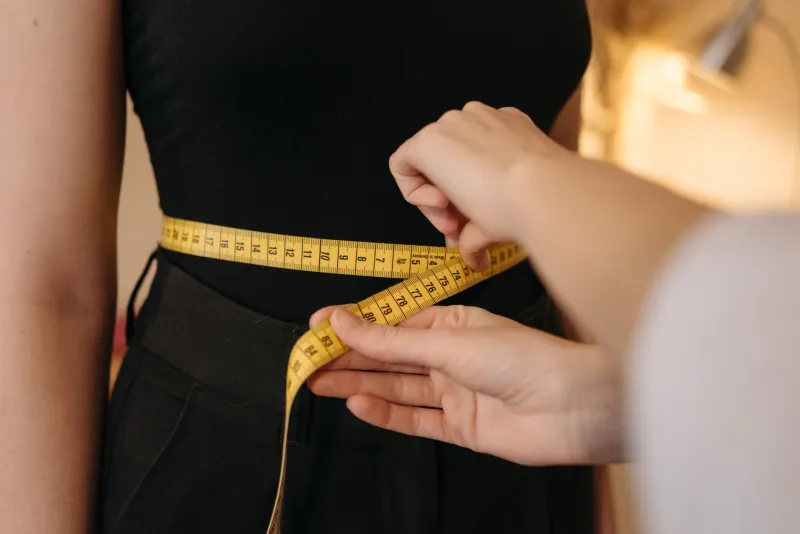
A skilled tailor is not a vandal. I cannot stress this enough. Taking a vintage piece to a trusted alterations specialist — ideally one with experience handling older construction and delicate fabrics — is not an act of desecration. It's an act of stewardship. You're extending the garment's life. You're giving it a body to inhabit again.
The Emotional Work Nobody Talks About
Even when you've given yourself intellectual permission to alter or reimagine an inherited piece, the feelings don't always follow logic. You might still feel a pang of something when the tailor marks the seams with chalk, or when you hand over a garment that still smells faintly like someone you miss.
That's okay. Feel it.
What I'd encourage you to resist is letting that feeling become a reason to keep the piece locked away. Grief has a way of attaching itself to objects, and sometimes that attachment becomes its own kind of hoarding — not of things, but of loss. The dress stays in the closet unworn because wearing it feels too hard, but not wearing it also feels like a small failure every time you open the door.
One thing that's helped me: documenting before altering. Photograph the piece from every angle. Write down what you remember about seeing it worn, where it came from, what it meant. You're creating a record that lives outside the fabric itself — which means the fabric is free to become something new.
What You're Actually Passing Forward
There's a longer story here, and it's worth naming. When you take an inherited piece and make it wearable for your life, your body, your moment — you're not ending its history. You're adding a chapter.
Maybe your daughter will inherit the same dress, now altered twice, carrying the shape of two women's lives in its seams. Maybe the fabric ends up in a quilt, or a tote bag, or the pocket lining of something you wear every single day. That's not loss. That's a living archive.
Conscious dressing, at its core, is about intentionality — about understanding why you wear what you wear and what it means to you. Inherited garments are some of the most intentional pieces we'll ever own, precisely because they come loaded with meaning we didn't choose. Working with that meaning, reshaping it to fit your actual life, is the most honest thing you can do.
A Few Practical Starting Points
If you're sitting on an inherited piece you haven't been able to figure out, here's where I'd start:
- Try it on, even if you think it won't fit. Sometimes bodies and garments surprise each other.
- Bring it to a tailor for a consultation before you decide anything. Just hearing what's possible can unlock a whole new perspective.
- Look up fabric upcycling specialists if the piece is truly unwearable but the material is beautiful. There are designers and makers across the US doing incredible work with repurposed textiles.
- Give yourself a deadline. Not a punishing one — a gentle one. "I'll decide what to do with this by spring" is more useful than letting it live in indefinite limbo.
- Ask yourself what she would have wanted. Not as a guilt trip, but as a genuine question. Most of the time, the answer is simple: for you to feel good.
Your body is not a betrayal of someone else's memory. It's the living thing that gets to carry their story forward. That's worth dressing well.