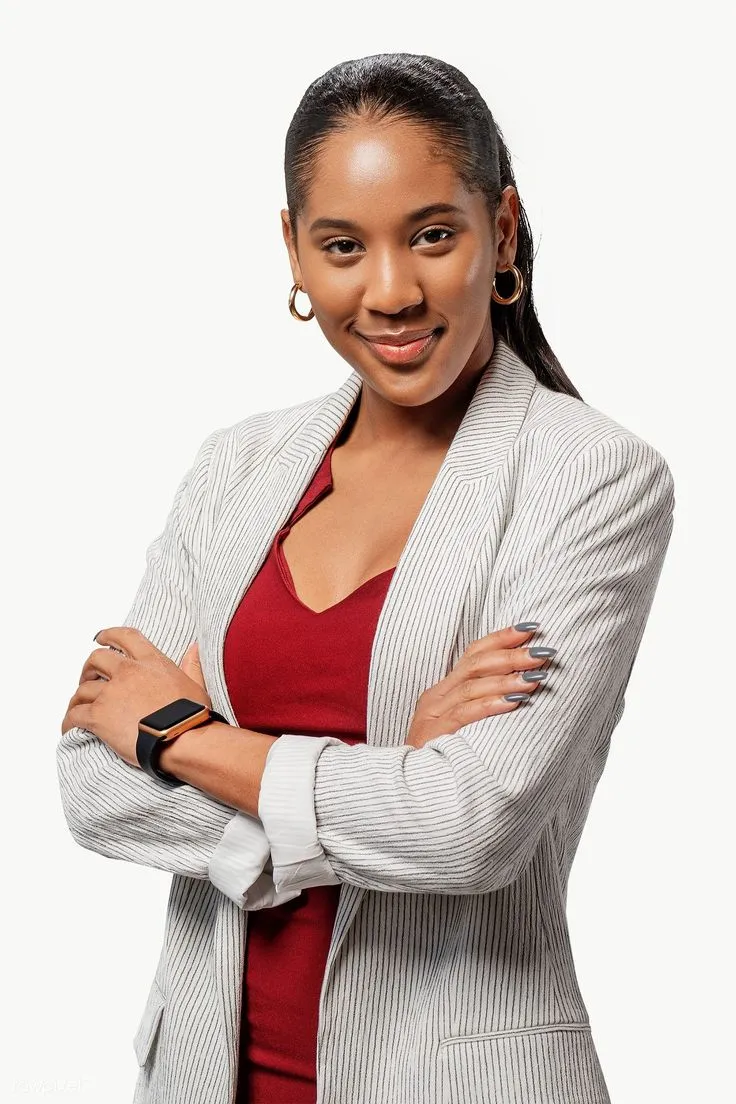
Your Aesthetic Is Not Vanity — It's a Blueprint for Living

Photo by Photo by Franco Debartolo on Unsplash on Unsplash
Somewhere between the third outfit change and the creeping dread of running late, most of us have stood in front of a closet full of clothes and felt completely empty-handed. It's a paradox that fashion creates and rarely admits to: the more options you have, the harder the choosing gets.
But there's a quieter truth on the other side of that chaos. When you've done the work of understanding your own visual identity — what you're drawn to, what feels like you on a cellular level — getting dressed becomes something else entirely. It becomes a decision you've already made.
That's the shift I've been thinking about a lot lately. And it's one I've seen happen, again and again, in the women I admire most.
The Psychology of Knowing Your Own Look
Decision fatigue is real, and it doesn't discriminate. Psychologists have documented it in everyone from judges to CEOs — the more choices you make throughout a day, the worse the quality of those choices gets. What rarely gets discussed is how much of that daily cognitive load is being quietly eaten up by your wardrobe.
When you have a defined aesthetic, you're essentially pre-deciding. You've already filtered out the noise. The question isn't "what do I wear today?" — it's "which version of myself am I stepping into?"
Mia, a graphic designer based in Brooklyn who has been a reader of this site for a few years, put it to me this way: "I used to buy things because they were on sale or because I thought I should want them. My closet was a graveyard of other people's ideas about who I was. Once I committed to my actual aesthetic — minimal, a little androgynous, very tactile — I stopped buying garbage. I bought less. I stressed less. I felt more like myself walking into a meeting than I ever did when I was trying to dress impressively."
That last part is the part worth sitting with.
Signature Style as a Form of Self-Trust
There's a reason certain designers and fashion creators become instantly recognizable. It's not because they're limited — it's because they've made a commitment. They've said this is the territory I'm working in, and that boundary actually generates more creativity than it restricts.
For a long time, I think a lot of us were sold the idea that having a signature look was somehow less sophisticated than being versatile. That a woman who always wore a certain silhouette or returned to the same color palette was playing it safe. But that framing is backwards. Knowing yourself well enough to have a visual point of view is not playing it safe. It's playing for keeps.
Jade, a stylist and content creator out of Los Angeles, told me she started noticing a shift in her clients when they stopped asking "is this trendy?" and started asking "is this mine?" "The clients who have the most confidence aren't the ones wearing the most expensive pieces," she said. "They're the ones who have figured out their own visual language. They walk differently. They make eye contact differently. Something unlocks."
Something unlocks. I keep coming back to that.
How to Find Your Visual Language (Without a Mood Board Spiral)
Let me be honest: the process of defining your aesthetic can get precious fast. Mood boards are useful, but they can also become a way of curating an aspirational self rather than your actual self. Here's what I've found works better.
Start with what you already reach for. Not what you own — what you actually wear. Pull out the pieces that feel like relief when you put them on. Look for the pattern. Is it the weight of the fabric? The way a collar sits? A particular silhouette that makes your shoulders drop? That's data.
Pay attention to what you notice on other people. Not envy, exactly — more like recognition. When you see someone on the street and think yes, that, write it down. Over time, you'll see a through-line.
Notice what makes you feel performative. There are clothes we wear to signal something — to a workplace, a social circle, an ex. Those pieces are usually the ones gathering dust. Your real aesthetic lives in the stuff you'd wear if no one was watching.
Give yourself permission to be consistent. This is the hard part for a lot of people, especially in a culture that constantly conflates novelty with creativity. Returning to what you love isn't boring. It's refinement.
Beyond the Closet
What I find most compelling about this whole conversation is that it doesn't actually stay in the closet. The women who've done the work of defining their visual identity tend to report spillover effects in other areas of their lives — clearer communication, stronger boundaries, less time spent seeking external validation.
That's not magic. That's just what happens when you practice trusting yourself in one domain. It builds muscle.
Personal style, at its best, is a daily practice in self-knowledge. It asks you to show up as yourself — not aspirationally, not performatively, but actually. And in a world that profits enormously from your uncertainty about who you are, that kind of clarity is genuinely radical.
Your aesthetic is not a shallow thing. It's a blueprint. And the more honestly you build it, the more it holds.