Dress It Forward: How to Build a Wardrobe Worth Passing Down

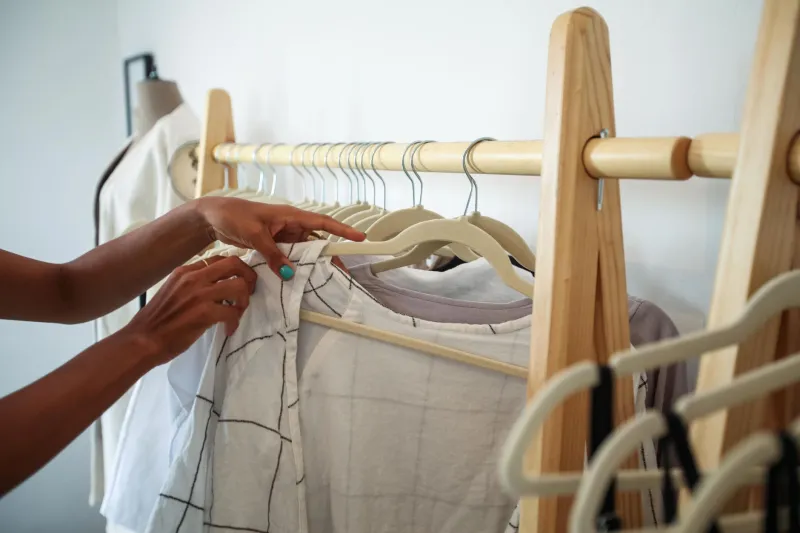
Photo by Photo by Annie Spratt on Unsplash on Unsplash
There's a photograph somewhere in almost every American family's archive — a grandmother in a perfectly cut wool coat, a grandfather in a suit that still looks sharp fifty years later. We look at those images and feel something. Not just sentiment. Recognition. That's good taste. And somewhere underneath the feeling is the quiet question: would anyone feel that way looking at what I wear today?
Building an heirloom wardrobe isn't a trend. It's not minimalism rebranded, and it's definitely not about owning fewer things just for the sake of it. It's about choosing pieces with such intention — such care for fabric, construction, and enduring silhouette — that they outlive the season, the decade, and maybe even you.
That's a different kind of shopping. And honestly? It's a more exciting one.
What Makes Something Worth Keeping
Longevity in clothing is a three-part equation: material, construction, and design. Get all three right, and you've got something that holds up physically and emotionally. Miss even one, and you've got a piece that either falls apart in the wash or sits unworn because it feels too dated to touch.
Fabric first. Natural fibers — wool, linen, silk, high-quality cotton — age in ways that synthetic blends simply don't. They develop character. A linen blazer softens over years of wear. A cashmere sweater gets better with careful washing and storage. These fibers breathe, move, and respond to the body in ways that polyester mimics but never quite captures. When you're shopping with longevity in mind, the hand-feel of a garment tells you more than the price tag ever will.
Construction second. Flip the piece over. Look at the seams. Are they finished cleanly? Is the stitching even and tight, or does it unravel when you tug gently? Check the buttons — are they sewn with a shank, or just tacked on? Look at the lining, if there is one. A well-constructed garment is built to be repaired, not replaced. That's the difference between a coat that lasts a season and one that lasts a generation.
Silhouette third. This is the trickiest one because it requires separating what's current from what's classic. Trends have a half-life. A truly timeless silhouette — a tailored trouser, a wrap dress, a straight-cut blazer — has been relevant across multiple decades and will continue to be. That doesn't mean boring. It means proportioned, intentional, and rooted in something deeper than this season's runway.
The Emotional Layer Nobody Talks About
Here's what the fashion industry rarely acknowledges: the pieces people actually want to inherit aren't always the most expensive ones. They're the ones that carry a story.
My grandmother's silk blouse wasn't a designer piece. But she wore it to every important dinner for twenty years. It carries the specific weight of being hers — the way she moved in it, the occasions it witnessed. That emotional residue is real, and it's something you can actually build into your wardrobe intentionally.
When you wear something repeatedly, in meaningful moments, it accumulates meaning. A coat you wore to your first real job interview and then to your kid's graduation carries a different kind of value than something you bought for a trend cycle and donated six months later. The wardrobe worth inheriting is the one that was actually lived in.
So ask yourself: which pieces do you reach for when something matters? Those are the ones to invest in, repair, and hold onto.
Shifting the Shopping Mindset
Building for legacy changes the way you evaluate a purchase — and not just in the obvious "cost per wear" way that gets thrown around in sustainable fashion circles. It changes the questions you ask.
Instead of Is this on trend?, you ask Will I still love this in fifteen years?
Instead of Is this affordable?, you ask Can I afford to repair this if it needs it?
Instead of Does this work for right now?, you ask Does this work for who I'm becoming?
This shift doesn't require a massive budget. Thrifting and vintage shopping are arguably the most direct paths to heirloom-quality pieces, because the garments that have survived decades of use and storage have already proven their durability. A secondhand Pendleton wool blazer or a vintage Levi's denim jacket has passed the test of time in a way that a brand-new fast-fashion equivalent simply hasn't.
When you do buy new, look for brands that are transparent about their materials and manufacturing — ones that offer repair programs or at least make their pieces repairable by a local tailor. That accessibility to care is part of what makes something last.
Teaching the Next Generation to Value What You've Built
Here's the honest part: your kids will only want your clothes if you've modeled that those clothes matter. Kids absorb values through observation long before they absorb them through instruction. If they see you treating your wardrobe as disposable — constant purges, constant hauls, constant churn — that's the relationship with clothing they'll internalize.
But if they grow up watching you care for a beloved coat, take a favorite pair of trousers to the tailor, and talk about why certain pieces are worth keeping? That's a different inheritance entirely. It's not just the garment. It's the value system embedded in how you treated it.
You don't have to be precious about it. You don't have to turn every clothing decision into a lesson. Just wear things like they matter, because they do.
The Closet as a Living Archive
An heirloom wardrobe isn't a museum. It's not frozen in time or off-limits to daily life. It's a living archive of who you are and what you've valued — and it grows and shifts as you do. Some pieces will make the cut. Others won't, and that's fine. The goal isn't perfection. It's intention.
Start small. Identify the two or three pieces already in your closet that you'd genuinely be sad to lose. Ask what makes them different from the rest. Then let that answer guide what comes in next.
The wardrobe worth passing down is built one good decision at a time. And the best time to start is right now — with whatever's already hanging in your closet, waiting to become something someone will one day fight over.