My First Custom Piece: Six Weeks, One Blazer, and Everything I Learned About My Own Body
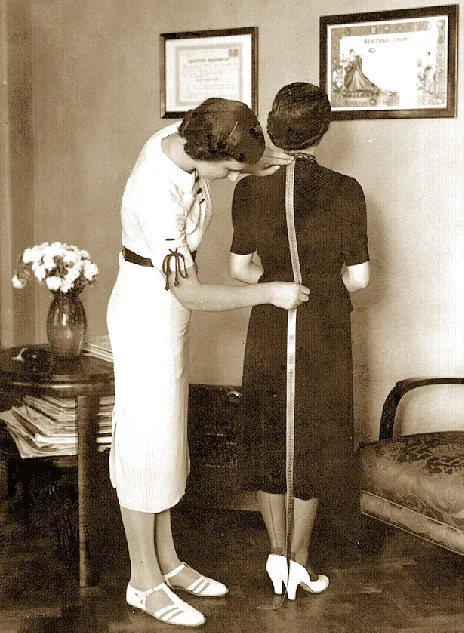
Photo: Gmihail at Serbian Wikipedia, CC BY-SA 3.0 rs, via Wikimedia Commons
I design clothes for a living, and I still wasn't ready for what happened when I commissioned my first made-to-measure piece.
It started, as these things often do, with frustration. I could not find a blazer that worked. My shoulders are a touch narrow, my waist does its own thing, and every off-the-rack jacket fit one part of me while failing the rest. So I stopped shopping and made a call to a tailor recommended by a friend here in Chicago.
The Consultation Is an Interview — Both Ways
The first meeting lasted over an hour, and most of it was her asking questions I didn't expect. Where would I wear it? What did I want it to say? Did I want it structured or soft? She had me flip through her pattern books and mark things — not to copy, but to understand what my eye was drawn to.
Then she measured me. Not three measurements. Twenty-some, including ones I'd never heard a tape measure asked about. Shoulder slope. Back length to the waist. The distance between my shoulder blades. I stood there in a fitted tank while she scribbled, and I remember thinking: this is more data than any algorithm has ever collected on me, and it's all being used to make one jacket.
What Custom Reveals About Your Body
Here's what nobody tells you: the measuring process is diagnostic. My tailor pointed out that my right shoulder sits slightly lower than my left — probably from years of hauling a bag on the same side. That off-the-rack blazers never sat right because they were balancing a body that isn't symmetrical. That my arms are long for my torso, which is why every sleeve I've ever bought was either short in the arm or baggy at the shoulder.
None of this was news to feel self-conscious about. It was the opposite — suddenly my decades of fitting room frustration had explanations, and none of them were my fault. Ready-to-wear is drafted for an averaged body that almost nobody actually has.
Choosing Everything Is Harder Than Choosing Something
The fabric selection nearly broke me. I came in wanting "a classic black blazer" and left with a swatch of charcoal Italian wool with a hint of stretch — after an education in weave weights, linings, and why Bemberg cupro breathes better than polyester.
Every choice was mine: single button or two? Peak lapel or notch? Functional sleeve buttons or decorative? Working with a maker means you can't hide behind defaults. You have to know what you want, and if you don't, the process teaches you. That, I've come to believe, is the real heart of conscious design — not just knowing where your clothes come from, but knowing exactly why they're yours.
The Fittings
There were three fittings. The first was the rough shell, basted together with white thread, more suggestion than garment. She pinned, marked, adjusted. The second fitting was where the magic happened — the collar was reshaped to lie against my neck instead of floating above it, the sleeve pitch rotated so it didn't tug when I reached forward.
The final blazer, delivered six weeks after that first meeting, fits in a way I didn't know clothes could fit. The collar touches my neck. The shoulder seam ends precisely where my shoulder does. When I put it on, I don't adjust it once. Not once.
What I'd Tell You Before Your First Commission
If you're considering it — and I think more people should — here's my honest advice:
- Start with one hard-to-fit piece, not a whole wardrobe. A blazer, trousers, or a coat rewards custom most.
- Bring references but hold them loosely. Your maker will steer you toward what will actually work on your body.
- Budget for it honestly. Made-to-measure in the US typically runs a few hundred dollars to well over a thousand. Spread over a decade of wear, it may be the cheapest garment you own.
- Ask about care and alterations upfront. A good maker plans for the body you'll have in five years, not just today.
I bought one jacket. But what I really came away with is a new standard — and the quiet, stubborn knowledge of exactly what I want. Turns out that's the first step of every well-designed thing, including a wardrobe.