Read the Label, Trust Your Hands: A Thrifter's Guide to Finding Pieces Built to Last
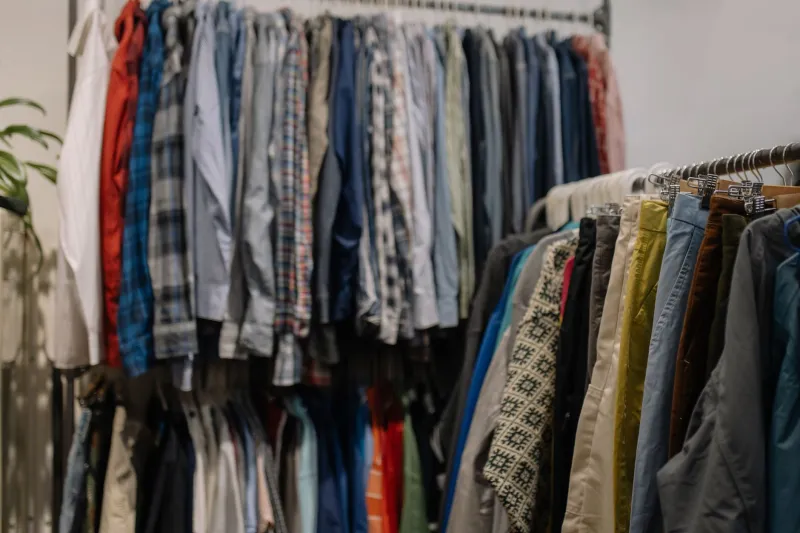
The best thrift find I ever made wasn't obvious from the hanger. It was a slightly rumpled blazer in a muddy shade of olive, pushed to the back of a rack at a Goodwill outside of Portland. No visible brand label. No dramatic moment of recognition. Just a feeling — the weight of it in my hand, the way the lining moved, the tightness of the stitching at the lapel.
That blazer turned out to be a beautifully constructed Italian wool piece from the early '90s. I've worn it hundreds of times since.
That's what thrifting with intention actually looks like. Not luck. Knowledge.
If you want to shop secondhand in a way that aligns with a real investment mindset — building a wardrobe of pieces that last, not just pieces that were cheap — you need a few practical tools in your back pocket. Here's where to start.
Start With Your Hands, Not Your Eyes
Before you look at a label, before you check the price, touch the fabric.
Quality fabric has a specific kind of weight and drape that synthetic, fast-fashion alternatives simply can't replicate. Natural fibers — wool, silk, linen, cotton — tend to feel substantial without being stiff. They breathe. They have texture with personality. A good wool will have a slight give; a quality silk will feel cool and fluid, not plasticky.
Synthetics aren't automatically bad — plenty of excellent garments incorporate nylon, rayon, or polyester blends intentionally — but the quality of those blends matters. Cheap polyester feels thin, almost papery. It catches light in a flat, artificial way. It pills almost immediately under friction.
Run the fabric between your fingers. Scrunch it lightly and release it. Does it bounce back cleanly, or does it crease and stay creased? Quality fabric recovers. It has memory.
The Seam Test: Where Construction Tells the Truth
If fabric is the first language of quality, seams are the second.
Flip the garment inside out and look at the seam finishing. In well-made clothing, you'll typically find one of a few techniques: French seams (the raw edge is enclosed entirely, giving a clean finish on both sides), bound seams (a strip of fabric wraps the raw edge), or serged/overlocked seams that are tight, even, and close to the fabric edge.
In cheaper garments, you'll often see seams that are barely finished, loose threads at every turn, or stitching that's uneven and widely spaced. Wide, uneven stitching means the seam is more likely to split under wear.
Also check the seam allowance — that's the extra fabric between the stitching and the raw edge. A generous seam allowance (roughly 5/8 of an inch or more) signals that the maker anticipated the garment being altered and worn long-term. Tiny seam allowances are a shortcut that limits the garment's lifespan.
While you're in there, look at the buttons. Are they sewn with a shank (a small loop of thread or a separate plastic/metal post that lifts the button slightly off the fabric)? Shanked buttons are a mark of tailored, quality construction. Flat buttons sewn directly to thin fabric with minimal thread — not so much.
Decoding Labels: What to Look For (and What to Ignore)
Labels can be genuinely useful, but they require a little context to read correctly.
Country of origin tells part of the story. "Made in Italy," "Made in USA," and "Made in Japan" have historically carried strong associations with quality manufacturing — not because of national pride, but because of the specific textile and tailoring traditions those regions developed over decades. That said, global manufacturing has shifted enormously, and great garments are made all over the world. Use country of origin as a starting point, not a verdict.
Fiber content is more reliably useful. Look for high natural fiber percentages: 100% wool, 100% linen, 100% silk, or quality blends like wool-cashmere or cotton-linen. Be cautious of labels that list "100% polyester" on structured garments — it's not always a dealbreaker, but it warrants closer inspection of the construction.
Brand heritage matters more than brand recognition. Some of the most well-constructed vintage pieces come from American department store house brands of the '70s and '80s — labels like Evan-Picone, Pendleton, or even higher-end Sears Roebuck lines — that prioritized durability because their customers expected it. Meanwhile, a recognizable logo on a thin, poorly finished garment is just marketing.
Spotting Fast Fashion in Disguise
This is the trickier skill, and it matters more than ever as fast fashion pieces from the 2000s and 2010s start flooding the secondhand market.
Here are the red flags:
- Pilling or fuzzing on an unworn-looking garment. If it's already pilling and it hasn't been heavily used, the fiber quality was poor from the start.
- Plastic-feeling fabric with no drape. Hold the garment up to the light. Does it hang naturally, or does it kind of... hover?
- Misaligned patterns at seams. Quality garments match their plaid, stripe, or print at the seams. It requires more fabric and more labor, so manufacturers cut this corner when they're cutting costs.
- Glued rather than sewn elements. Check where embellishments, trims, or lining edges meet the garment. If you can see or feel adhesive rather than stitching, the piece wasn't built to last through washing.
- Extremely light weight in a garment that should have structure. A blazer, trouser, or coat that feels insubstantially light is usually telling you something about its fiber content and construction.
Building a Thrifting Practice That Compounds Over Time
The more you handle quality garments, the faster you'll develop an instinct for them. It's genuinely a skill that gets sharper with repetition.
If you're newer to thrifting with intention, start by spending time in the better vintage stores in your city — places that do some of the curation work for you. Handle everything. Notice what the pieces that feel good have in common. Then take that knowledge to the Goodwills and the Salvation Armys and the estate sales, where the prices are lower and the finds are more unpredictable.
Bring a small flashlight if you're serious. It sounds extra, but it genuinely helps you see seam construction and fabric texture more clearly in the notoriously dim lighting of most thrift stores.
And remember: the goal isn't to find the most pieces. It's to find the right pieces — the ones built well enough to become part of a wardrobe you'll actually love for years. That's the whole point.