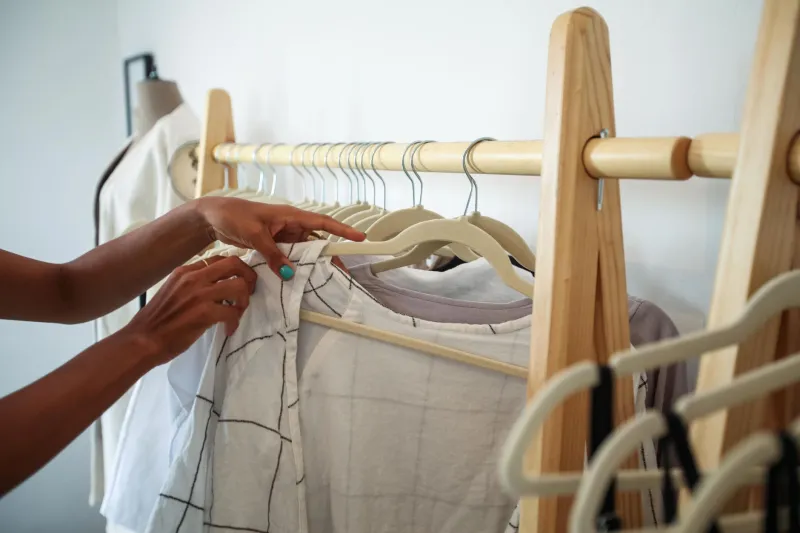
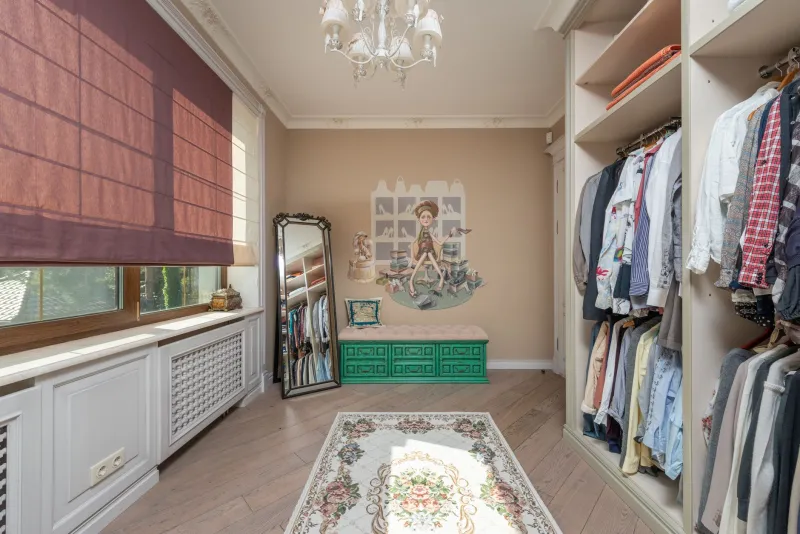
Dress for the Woman You're Still Becoming: Building a Wardrobe That Grows With You
There's a version of you five years from now. Ten years. Maybe twenty. She has opinions you haven't formed yet, a life you're still sketching out, and — if you play your cards right — a wardrobe that already fits her perfectly.
That's the real promise of a thoughtfully built capsule wardrobe. Not minimalism for minimalism's sake. Not a Pinterest grid of neutral tones stacked on a shelf. It's a living, breathing archive of pieces chosen with enough foresight that they keep working for you as you change, rather than getting quietly phased out every time your life shifts direction.
This is what I think of as the heirloom approach to dressing. And it starts long before you ever open your closet door.
Why Most Capsule Wardrobes Fail Within Two Years
Here's the uncomfortable truth: most capsule wardrobes get abandoned not because the concept doesn't work, but because they're built for the present tense. We curate for the life we have right now — the commute, the social calendar, the aesthetic phase we're currently in — without leaving any room for evolution.
And then life does what it always does. It moves. You get a new job, relocate to a different city, fall in love with a new creative pursuit. Suddenly those twelve perfectly selected pieces feel like they belong to someone you used to be.
The fix isn't to buy more. It's to choose differently from the start — with an eye on the long arc rather than just the current chapter.
Start With Silhouette, Not Style
Style is personal and it shifts. Silhouette is structural, and it's far more durable.
When you're selecting anchor pieces for a wardrobe meant to last, think less about whether something feels trendy or on-brand for your current aesthetic, and more about how the shape interacts with your body over time. A well-cut wide-leg trouser, for example, isn't tied to a single decade — it's been reinterpreted across every era of fashion because the geometry simply works. Same goes for a clean A-line skirt, a boxy blazer with honest shoulders, or a straight-cut shirt dress with room to breathe.
These silhouettes share something important: they don't require your body to be a fixed variable. They accommodate change — whether that's physical, contextual, or simply stylistic — without losing their integrity.
When you're shopping, ask yourself: Would this shape still feel relevant to me in a decade if every other detail about my life were different? If the answer is yes, that's your anchor piece.
Fabric Is the Real Investment
A silhouette is only as good as the material holding it together. This is where so many otherwise well-intentioned purchases fall apart — literally.
Fast-fashion versions of classic shapes exist everywhere, but they're designed with a built-in expiration date. The weave loosens, the drape goes limp, the color fades into something apologetic. You can't build an heirloom wardrobe on a foundation that won't survive a few hundred washes.
For pieces you're choosing to keep for the long haul, lean into natural fibers with proven staying power: dense wool crepe, heavyweight linen, tightly woven cotton poplin, silk charmeuse that's been properly finished. These fabrics don't just hold up — they often improve with age, developing a softness and patina that cheap synthetics can never replicate.
And don't skip the tactile test. Run the fabric between your fingers. Hold it up to light. Tug gently at the seams. A piece built to last will tell you so before you ever check the tag.
The Constraint That Expands Everything
Here's the counterintuitive truth about building a wardrobe with longevity in mind: the more constraints you place on your color story, the more creative freedom you actually gain.
Choose three to five colors — ideally ones that appear somewhere in your natural coloring, or that you've returned to again and again across different seasons of your life — and let those be the filter through which every future purchase passes. This isn't about being boring. It's about building a wardrobe where everything genuinely speaks to everything else, where getting dressed becomes less about problem-solving and more about expression.
For most people, that palette ends up anchored by one or two deep neutrals (think ink navy, warm charcoal, or a true camel), one or two mid-tones with some personality, and a single accent that shows up sparingly but meaningfully. The specifics are yours to define — what matters is the consistency.
When your entire wardrobe operates within a coherent color language, you stop accumulating orphan pieces. Every new addition has somewhere to belong.
Intentional Repetition Is a Design Strategy, Not a Limitation
Some of the most iconic personal styles in fashion history are built on repetition. Karl Lagerfeld's uniform. Diane Keaton's layered neutrals. The way certain designers return to the same silhouette season after season, refining rather than reinventing.
There's real intelligence in that approach. When you find a cut that works for your body and your life, buying it in multiple colorways or fabrics isn't a lack of imagination — it's a commitment to what actually functions. It removes friction from your mornings, reduces decision fatigue, and lets you invest more deeply in quality because you're not spreading your budget across a hundred different experiments.
Think of it as developing your personal uniform. Not a costume, not a rigid rule, but a recognizable visual language that shows up consistently enough to feel intentional. That's the kind of dressing that reads as confidence, not monotony.
The Future-Self Test
Before any significant wardrobe purchase, I like to run what I think of as the future-self test. It goes like this:
Imagine handing this piece to a version of yourself who is ten years older, in a slightly different life context, with a more settled sense of who she is. Would she be grateful? Would she reach for it? Or would she quietly set it aside as something that belonged to a phase?
The pieces that pass that test tend to share a few qualities: they're made well enough to still be in circulation a decade from now, they're cut in a way that doesn't depend on a specific cultural moment to make sense, and they carry some emotional resonance — a color you've always loved, a fabric that makes you feel like yourself, a shape that's appeared in your wardrobe in some form since you started dressing intentionally.
Those are your heirlooms. Not necessarily the most expensive pieces, not always the most dramatic — but the ones that quietly anchor everything else and keep showing up, season after season, as exactly what you needed.
Building the Edit
If you're starting from scratch or doing a serious reassessment, here's how I'd approach it:
Audit what you already own with fresh eyes. Pull out the pieces you've worn for five or more years and still love. Study them. What do they have in common — in cut, fabric, color, or feeling? That's your blueprint.
Identify the gaps, not the wants. A wardrobe built for longevity is completed slowly and deliberately. Instead of filling it with whatever's available right now, name the specific silhouettes or fabric weights that are missing and wait for the right version.
Set a cost-per-wear benchmark. A $400 wool coat worn 150 times over ten years costs less per wear than a $60 coat that falls apart after two seasons. Do the math before you default to the cheaper option.
Buy less, but buy with intention. The goal isn't a full closet. It's a closet where every single piece earns its place — where you open the door and feel abundance, not overwhelm.
Your future self is already waiting for this wardrobe. Start building it now.