From Napkin Scribble to Your Closet: How a Garment Actually Gets Made
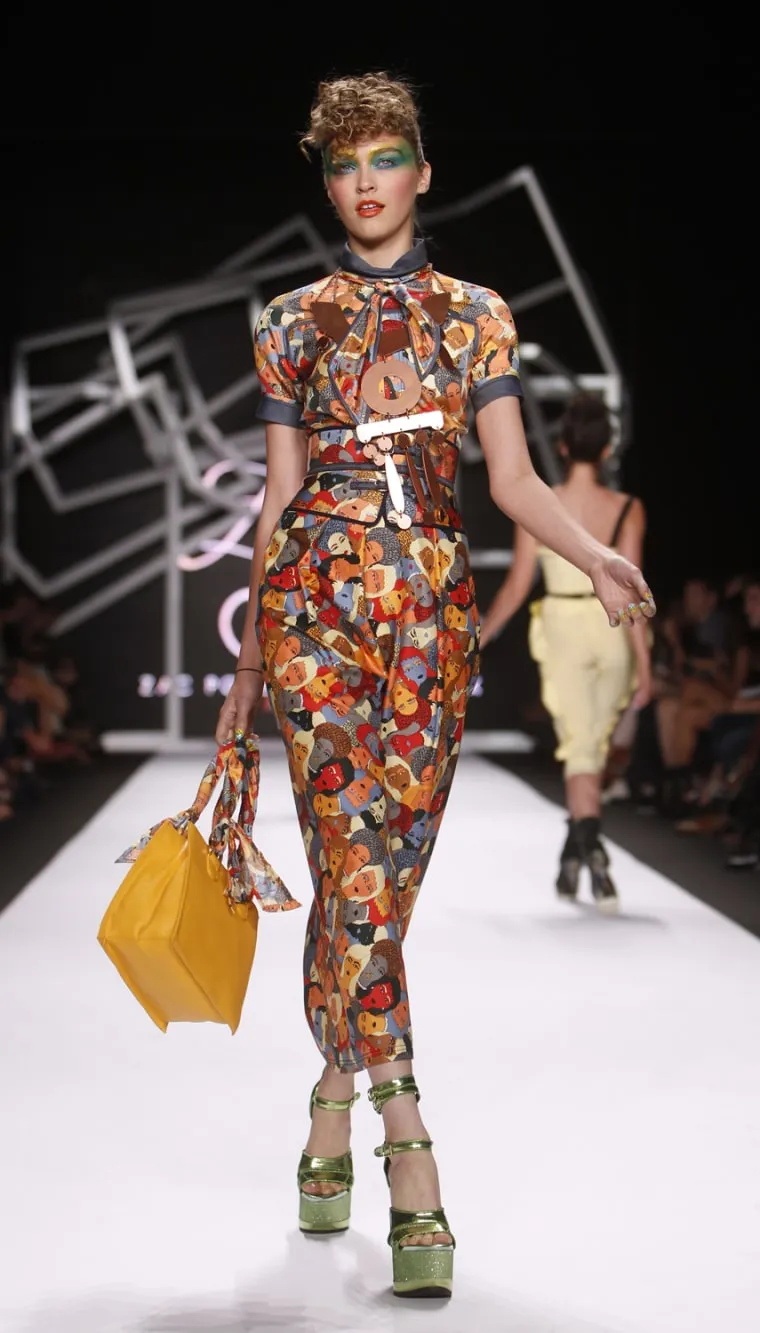
Photo: fashion designer sketchbook with fabric swatches and charcoal drawings on studio table, via media-cldnry.s-nbcnews.com
There's a page in my sketchbook I keep flipping back to. It isn't a drawing of a garment — it's a scribble: a heavy charcoal loop that doubles back on itself, a margin note that reads the way a curtain moves when the window's open, and a scrap of washed cotton twill stapled to the corner because I liked the way it folded. That's the entire idea. A feeling, a fabric, and a question I hadn't answered yet.
Fourteen months later, that page is a jacket hanging in a showroom.
People ask how a design travels from I have a thought to I have a hanger, and I think they expect something tidy — trend deck, mood board, tech pack, done. It isn't tidy. It is a process, though, and once you understand it you start seeing the decisions baked into a garment instead of just the number on the tag.
It starts with a feeling, not a fabric
The myth of design is that it begins with a season, a color card, or a runway directive. For me it begins with an irritation or an admiration. A jacket that gapes at the chest when you reach for a bus pole. The way a friend's grandfather wore the same chore coat for thirty years and it molded to him like it was in on a secret.
I keep a running list in the back of every sketchbook. Not trends — sentences. Things like sleeve that stays put when I roll it or pocket big enough to actually hold a phone and a key without slumping. Half of those sentences become nothing. A few of them become the spine of a collection. That's the first filter a design has to survive, and honestly, it's the toughest one, because a pretty sketch will carry you for weeks before you admit it isn't solving anything.
The first sample is a lie you tell yourself on purpose
A first protoype is always wrong. Always. The armhole is too high or the shoulder is fighting the curve of your back, or the fabric that looked so gorgeous flat on a table hangs like a wet towel. The first sample exists to be disproven. It's a hypothesis, not a garment.
This is where I think a lot of shoppers get confused about high prices. They see a simple jacket and think simple should be cheap. But simple is where every flaw shows. A tailored, busy design can hide a bad armhole. A plain wool coat cannot hide anything. The money is in the second, fourth, sometimes seventh sample — the small, unglamorous corrections that make a garment feel like it was built for a human being instead of a mannequin in a Brooklyn showroom that never has to sit down.
Where the drawing hits the body
This is my favorite room and my least favorite room. Fittings are where the romantic idea meets real life: a friend who is five foot two, a model who is six foot one, a size chart that has to hold all of it with actual integrity rather than a vanity number.
I fit on people, not dress forms. Dress forms don't take an Uber, don't sit through a two-hour meeting, don't eat a big dinner. When I put a piece on a real person, I ask them to do four things: reach overhead, sit down, walk a block, and take a coat on and off. If any of those turns into a wrestling match, we go back to the table. It's not glamorous. It is, in my opinion, the whole job.
The quiet cuts
For every three good decisions in a garment, there's usually one beautiful one I had to kill. A seam that looked like jewelry but scratched. A pocket that ruined the line. A lining that made the drape perfect and made the piece impossible to alter later.
That's the balance I think about constantly: artistic vision versus the practical reality of someone's actual Tuesday. A garment that only works on a body that isn't moving is not a garment — it's a photograph. I'll take the moving version every time, even when it's less interesting on the hanger. The interesting part is supposed to happen when you wear it.
What this means when you're at the register
You're not going to see the sample rack or the fitting notes. But you can ask the questions the process teaches you to ask:
- Does it move? Reach up. Sit down. Squat like you're picking up a toddler. If the piece fights you in the fitting room, it will fight you forever.
- Can it be mended? Look inside. Are the seams clean and accessible, or sealed in a way that means a small repair totals the whole piece?
- Is it doing one job? If a piece only works for one specific event, one specific shoe, one specific mood, you're not buying a garment, you're buying a costume.
- Where is the volume? A little extra ease in the shoulder and hip is what makes a piece survive ten years of a changing body. Right against the skin everywhere is a countdown clock.
The pieces that survive the sketchbook
The jacket from that charcoal scribble eventually got made — with a narrower shoulder than my first drawing, a slightly lower armhole, and two pockets instead of three, because the third one made the front hang wrong when it was full. Nobody will ever know that. That's fine. The best design work is invisible by the time it reaches you.
So when you pick something up, treat it like it survived something, because it did. Ask what problem it was solving. If the answer is looking like a certain kind of person online, put it down. If the answer is the way a curtain moves when the window's open — well. That one you might want to keep.