The Sample Rack Doesn't Lie, but the Discount Will
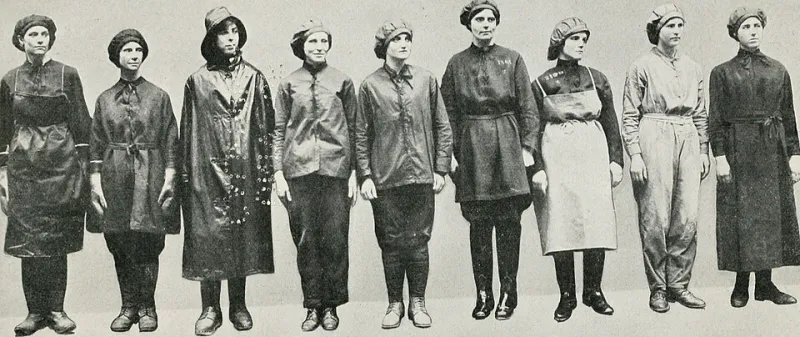
Photo: Great Britain. Home Office, No restrictions, via Wikimedia Commons
There's a particular smell to a sample sale. Steamed wool, carpet cleaner, and the anxiety of thirty people trying on the same jacket. I've been on both sides of the table — the one folding, and the one digging. So when I say the sample rack doesn't lie, I mean it. It just tells you things you didn't ask to hear.
First, know what you're actually holding
A sample is not a smaller version of the dress. It's a prototype. It was cut once, usually on a fit model — and in this industry that's typically someone around 5'9", with a 34-inch bust and a 25-inch waist. That sample size 4 has almost nothing to do with the size 4 that eventually hit the sales floor, because production sizing gets graded from that single body and then adjusted by committee.
So when a tag says sample, ask what kind. Fit samples are the earliest and the strangest. Runway samples are built to walk, not to sit down in. Salesman samples are usually the closest to production. Photo samples have been pinned, clamped, and steamed into a shape they will never hold again. None of this makes them bad. It makes them specific.
The final-sale math nobody does
"All sales final" is not a rule. It's a price adjustment. The moment you accept no returns, the sticker price stops being the real cost and becomes the opening bid.
My math looks like this: purchase price, plus realistic alterations, plus the odds I'll actually wear it. A $180 blazer that needs $90 of work and gets worn twice a month for three years is a great deal. A $60 dress that fits almost and lives in the back of the closet is a $60 tuition payment.
Before you get to the register, decide your alteration ceiling. If I'm in for more than about a third of the ticket price in tailoring, I walk. Exceptions exist — a truly extraordinary fabric, a piece I've wanted for years — but they should be rare enough that you can name them.
What I check in the first sixty seconds
I don't try things on first. I inspect.
- Seams and underarms. Pull the lining out. Look for yellowing, deodorant crust, or a hem that's been let down and re-stitched badly.
- Hem allowance. How much fabric is folded up inside? That's your future length.
- The fabric itself. Hold it to the light. Rub a corner between your fingers. A sample made of a gorgeous silk that's already water-stained in the armpit is a garment with one season left in it.
- Hardware and closures. Zippers that stick, buttons that were sewn on with three stitches, hooks that don't align — all fixable, all a negotiating lever in your head even if the price is fixed.
- Smell. Storage tells you everything. If it smells like a basement, it lived in one.
Alterations: the honest list
Worth doing: taking in a waist, shortening a hem, adjusting straps, slimming a side seam, replacing a cheap zipper, adding a hidden snap.
Not worth doing: rebuilding shoulders, changing armholes, taking a garment down more than one size, adding length that isn't there, or making a structured jacket fit a body it was never drafted for. Shoulders are the load-bearing wall. Leave them alone.
Budget $40 to $150 for a normal round of alterations in most US cities, more in New York or Los Angeles. Ask the tailor for a quote before you buy, not after. Most will give you one from a photo and a measurement.
Fit now, not fit eventually
The single most common mistake at a sample sale is buying the body you're planning to have. Ten pounds from now, a different season, once you start Pilates. I've made this purchase four times and I still own none of those clothes.
If it doesn't close comfortably today — literally today, standing in a fluorescent-lit room with a security guard watching — it isn't your sample. Somebody else's, sure. But not yours.
Leave clean
There's a moment near the end of every sample sale when the prices drop and the room gets feral. That's when people buy three of something they didn't want at full attention. My rule: if I wouldn't have considered it at 40 percent off, I don't want it at 80. The discount is not a personality. It's just arithmetic.
Go in with a list, a measurement card in your phone, a hard alteration ceiling, and permission to walk out empty-handed. The rack will always be full again next season. So will your closet, and that's the thing you actually have to live with.