The Archive Belongs on Your Body
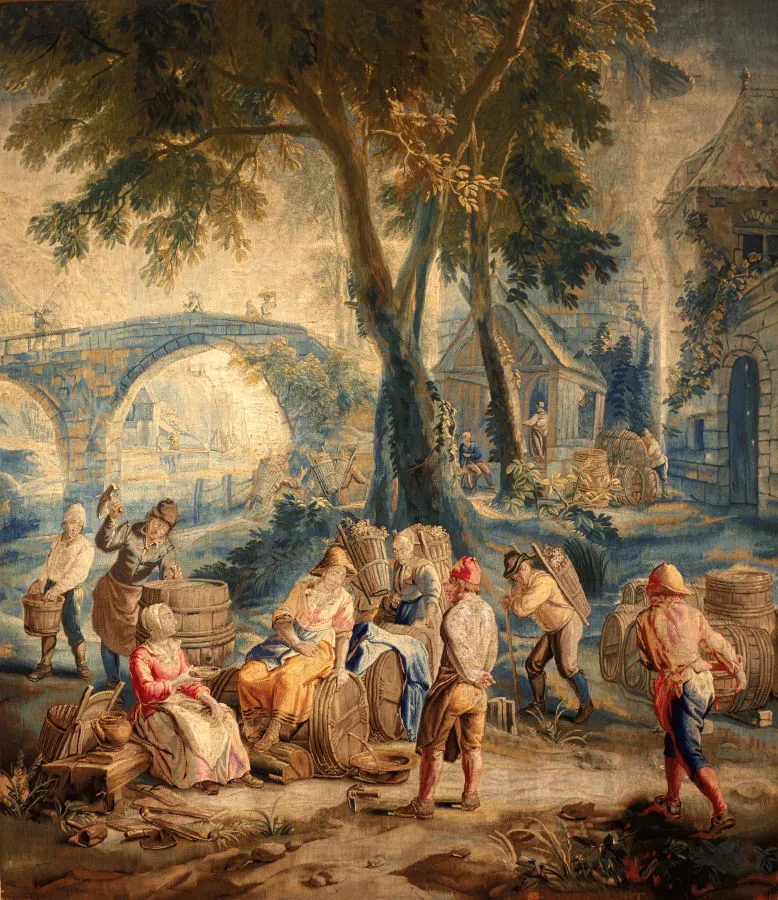
Photo: Jan van Orley / Augustin Coppens, Public domain, via Wikimedia Commons
I own a 1990s wool coat from a French house that I bought at an estate sale in New Jersey for less than a nice dinner. The first year I had it, I wore it exactly twice — both times to events where I felt like I was carrying an artifact rather than wearing a coat. Then it got rained on, and I realized nothing terrible happened. It's been in rotation ever since.
That's the whole thesis. The archive is not a museum. If a garment survived thirty years to reach you, the least you can do is let it live a little.
Buy the bones, not the label
Half the vintage designer on the resale market is being sold on name recognition alone, and half of that isn't worth the shipping. What I look for is construction: full seam allowances, hand-finished buttonholes, a properly canvassed jacket front, real horn buttons, a lining with a generous hem.
When I'm buying online — The RealReal, Vestiaire, Grailed, the occasional eBay gamble — I ask for photos of four specific things: the interior label, the fabric content tag, the care label, and the hem from the inside. Sellers who can produce those are usually selling something real. Sellers who get weird about it are telling you something too.
Authentication questions worth asking
Authentication is not one check, it's a stack of them. For most mainstream designer vintage, the following will catch the obvious fakes:
- Labels and typography. Fonts shift between eras. A 2005 label style on a garment cut like 1985 is a red flag.
- Union and origin tags. US-made garments from certain decades carry union labels with specific styling that can be dated. Asian production tags appear at different points depending on the house.
- Hardware. Zippers, snaps, and engraved clasps. Cheap hardware is usually a cheap garment.
- Interior construction. Fakes skip the parts you can't see.
- Date codes. Some houses use them, some don't. Don't let a seller convince you a code proves anything on its own.
For anything above a few hundred dollars, pay for a professional authentication service. It's cheap insurance and it protects you when you resell.
Alterations: what a good tailor can and can't fix
Vintage sizing is a fiction. A 1970s size 8 can be a modern 4. Ignore the number entirely and buy to the shoulders and the bust — those are the hardest things to change.
A skilled tailor can take in a waist, shorten a hem, slim sleeves, adjust straps, replace a lining, and rebuild a collar. On a heavier vintage coat or a structured suit, expect to pay $100 to $300 for real work. That's not a reason to skip it; a well-altered $400 vintage coat beats a $400 new coat that fits fine.
What a tailor cannot do: change shoulder width meaningfully, add length, fix a garment that's been cut too small in the bust, or rescue fabric that's already weak. If the seams are dry-rotting, no amount of skill saves it.
Before altering anything, wear it once as-is. Sometimes the proportions that felt wrong are the reason the piece is interesting.
Care without paranoia
A few things I've learned the hard way:
- Don't dry-clean on a schedule. Vintage garments have survived on minimal intervention. Clean when there's a reason.
- Hand-wash with caution. Old silk and rayon can handle cool water and gentle detergent if you test an inside seam first.
- Fold knits flat and store in acid-free boxes. Never hang a heavy knit.
- Don't hang beaded pieces. The weight will pull the shoulders out of shape.
- Cedar and airflow beat mothballs every time.
- Repair early. A small stitch now is a big bill later.
Styling it into now
The instinct with a special vintage piece is to style it as a period costume. Resist. The reason archive garments look good in editorials is that stylists treat them as one element, not the whole story.
A 1980s blazer with a plain white tee, straight-leg denim, and flat shoes reads modern. A 1960s shift with sneakers and a tote reads modern. The trick is to give the garment one contemporary anchor — a shoe, a bag, a haircut — and let everything else stay quiet.
Also, wear it casually. Wear it to the grocery store. Wear it in the rain. Wear it until the elbows get that particular shine that only comes from actual use. A garment that's been worn has a life to it that no pristine deadstock piece can match.
Insure it, then forget it
If a piece is worth more than a month's rent, add a rider to your renter's or homeowner's policy. Photograph it. Keep the receipt. Then stop thinking about it.
The worst thing you can do to a beautiful old garment is treat it like it's already broken. It isn't. It's just older than most of your other clothes, and it's been waiting for someone with the nerve to put it on.