The Number on the Tag Is Lying to You — Here's How to Stop Letting It Win

Let's start with a confession. I've stood in a dressing room, pulled on a pair of trousers that fit perfectly everywhere that mattered — waist, hip, thigh — and then quietly put them back on the rack because the size printed inside felt wrong. Not too big. Not too small. Just wrong. Like wearing the wrong name tag at a party where you're already anxious.
If that sounds familiar, you're not alone, and you're not vain. You're human, and you've been navigating a sizing system that was never built to serve you.
Why Clothing Sizes Are Essentially Fiction
Here's the uncomfortable truth: there is no universal standard for women's clothing sizes in the United States. None. The last time the federal government attempted to create one was in the 1940s, and those standards were based on measurements taken from a narrow, non-representative sample of young, white women. The fashion industry has been improvising ever since.
What followed over the next several decades was a phenomenon researchers now call vanity sizing — brands gradually inflating their size labels so that customers feel they're fitting into something smaller than they actually are. A size 8 today is not the same garment as a size 8 from 1985. The cut is often larger, but the label stayed the same or even shrank. The goal was simple: make shoppers feel good in the dressing room, and they'll buy.
The result? A shopper in 2025 might wear a 4 at one retailer, a 10 at another, and a medium at a third — all in the same afternoon. And somehow, we've been trained to internalize each of those numbers as a reflection of ourselves rather than a reflection of inconsistent manufacturing.
The Gap Between Self-Perception and the Mirror
There's a psychological concept called body image distortion — the disconnect between how we perceive our bodies and how they actually exist in space. Most conversations about this focus on people who see themselves as larger than they are. But the reverse happens too. People who've lost weight, changed shape, or simply haven't updated their mental self-portrait in years can reach for the wrong sizes, squeeze into things that don't fit, and then wonder why they feel uncomfortable all day.
Clothing is one of the most intimate ways we interact with our physical selves. Every time a garment doesn't fit the way we expect, it triggers something — embarrassment, frustration, confusion. And because we've been conditioned to treat size as a proxy for worth, a number that surprises us can feel like a verdict.
It isn't. It's just a number someone typed into a spec sheet in a factory overseas.
The Emotional Labor Nobody Talks About
Finding clothes that actually fit your body — your real, specific, right-now body — takes work. It takes trying things on, ordering multiple sizes, returning what doesn't work, and resisting the urge to blame your body every time something pulls across the shoulders or gaps at the waist.
That labor is not equally distributed. If you're petite, plus-size, tall, or have a body that doesn't map neatly onto the hourglass proportions most ready-to-wear is designed around, you're doing significantly more of it. You're navigating a system that wasn't designed with you in mind and somehow expected to feel good about the results.
Acknowledging that this is genuinely hard — not a personal failure, not a motivation problem — is the first step toward dressing with less friction.
Practical Strategies for Dressing Your Actual Body
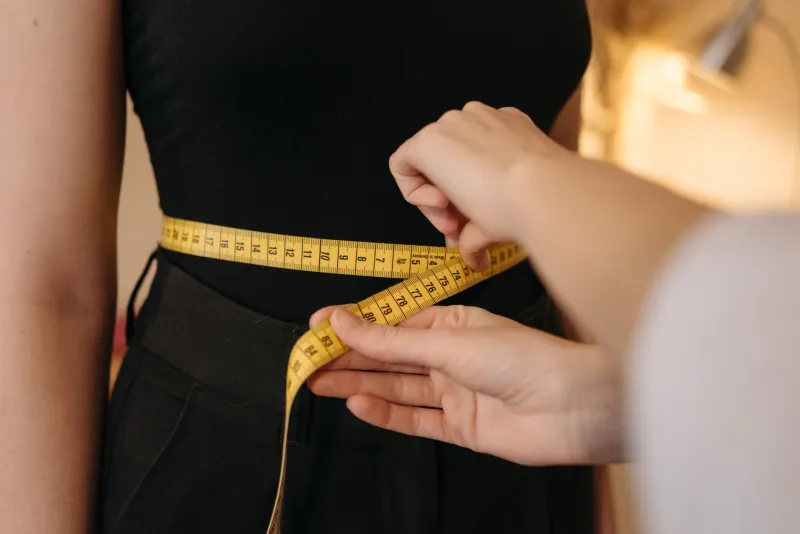
Learn your measurements, not your size. Grab a soft measuring tape and get your actual bust, waist, hip, and inseam numbers. Write them down. Keep them in your phone. When you're shopping online, use the brand's size chart — not your usual size — to find the best fit. This single habit will cut your return rate dramatically.
Shop by fit, not by label. Train yourself to ask one question in the dressing room: does this feel good on my body right now? Not, is this the size I want to be wearing? Not, could I size down if I just... The question is only ever: does this fit?
Cut the tags if they bother you. This sounds small, but it matters. If seeing the number inside your favorite jeans messes with your head, remove it. The jeans fit. That's the only information you need.
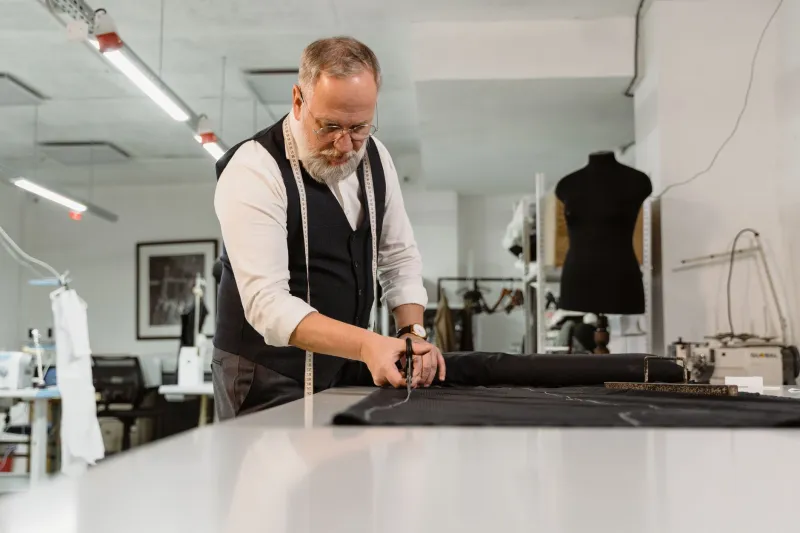
Understand where fit problems actually come from. Most off-the-rack clothing is designed for a single, idealized body proportion. If your waist is significantly smaller than your hips, or your shoulders are broader than average, or your torso is longer than typical — the issue isn't your body. It's the pattern. A good tailor can bridge that gap for far less than you'd expect, and the result is a garment that feels like it was made for you, because in a meaningful sense, it now is.
Seek out brands that size differently. A growing number of labels — many of them smaller, independent, and more conscious — use more inclusive size ranges, extended fits, or even made-to-measure options. Universal Standard, Girlfriend Collective, and Quince are a few names worth exploring. The landscape is changing, slowly but genuinely.
Reframing What "Fits" Actually Means
A garment that fits isn't one that makes you look like someone else. It's one that lets you move through your day without thinking about it. It's one that doesn't require constant adjusting, pulling, or sucking in. It sits where it's supposed to sit, moves when you move, and doesn't announce itself every time you stand up.
That kind of fit has nothing to do with a number. It has everything to do with proportion, construction, and the specific geometry of your actual body — which is, for the record, not a problem to be solved.
The sizing system is broken. Your body isn't.
Once you really absorb that distinction, shopping becomes less of a referendum on your worth and more of what it was always supposed to be: finding the things that work for you, leaving behind the things that don't, and moving on with your day in something that feels genuinely good.
That's the whole project. Everything else is just noise.